
GAA Club Subs Tracker Excel – Free Template (2026)
6
Free download
Estimate Fair Deal contributions, keep care-cost figures in one place, and compare weekly fees, asset values, and support payments.
Download template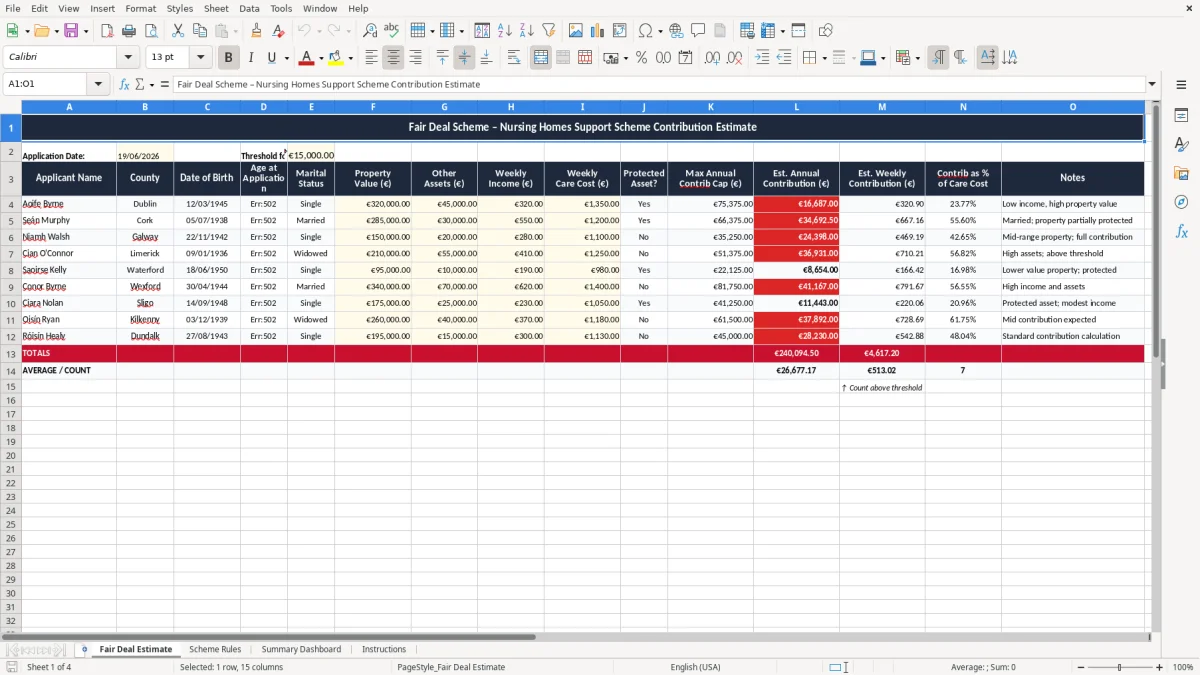
This Fair Deal Scheme Excel template helps you estimate the nursing home contribution under the Nursing Homes Support Scheme and keep the figures in one place. It includes a Fair Deal Estimate sheet, Scheme Rules sheet, Summary Dashboard, and Instructions sheet.
Use it if you are planning for long-term care costs, helping a parent, or checking what contribution is likely to come from income and assets. The template gives you a clear starting point for the weekly charge, the asset calculation, and the summary view.
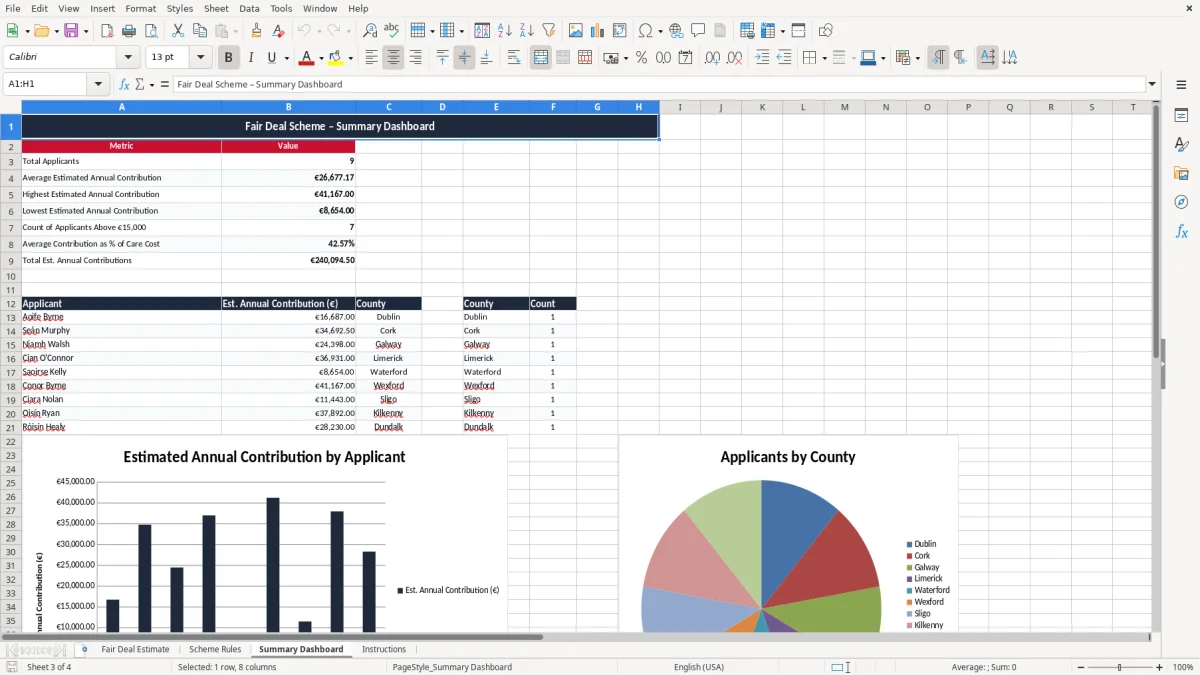
Image 1 shows the estimate sheet where you enter the resident’s details and cost inputs. Image 3 gives you a dashboard view so you can see the main numbers without working through the whole sheet again.
This is the sort of workbook you open when a parent is moving into a nursing home, when an attorney is trying to work out likely cash flow, or when you are helping a sibling understand what the scheme may take from income and assets. In practice, the pressure point is often a sudden monthly fee of €1,200 to €1,800 on top of other household costs, so the estimate has to be quick and clear.
For a family with a house worth €320,000 and savings of €48,000, the question is not academic. You need a working figure before you decide whether to sell, rent, or leave the house in place while the application is being processed.
Image 1 shows the Fair Deal Estimate sheet, where the main inputs sit together and the result is easier to follow than in a notebook or email thread. That matters when three people are trying to discuss the same resident and nobody wants to retype the same numbers twice.
If weekly care costs are €1,400 and the resident’s pension contributes €240, the gap is already €1,160 a week before any asset-based contribution is added. A template like this lets you see that gap immediately, which is much better than discovering it after the first invoice lands.
The Fair Deal scheme is built around a means assessment, not a vague “roughly this much” guess. The resident generally contributes 80% of income and 7.5% of assets each year, with the principal private residence capped at 7.5% for the first 3 years, so the asset side needs careful handling.
That cap matters because 7.5% of a €300,000 home is €22,500 a year, but only for the first 3 years under the property cap. After that, the property position stops being the same kind of issue, and the estimate has to reflect the actual assessment period.
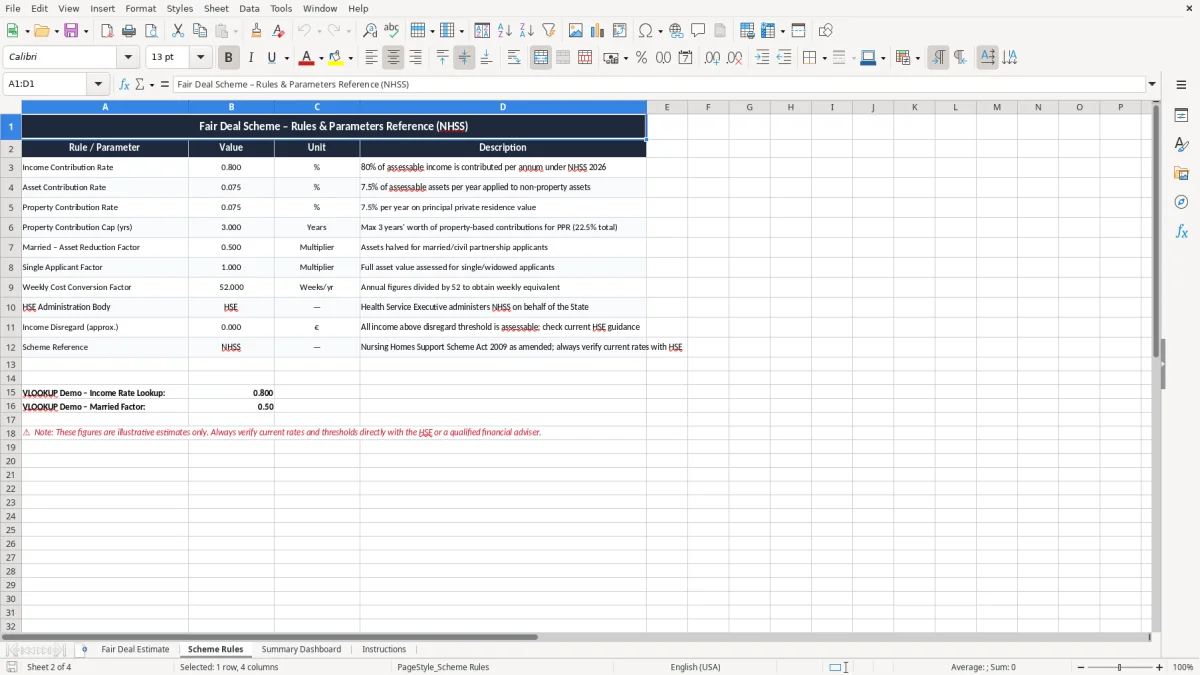
Image 2 shows the Scheme Rules sheet, which is where you keep the assumptions visible instead of hiding them in formula cells. That is useful if you are comparing two options, such as keeping a property versus selling it before the contribution is finalised.
On a pension of €18,000 a year, an 80% contribution gives €14,400, leaving €3,600 for personal expenses and other costs. When you add asset contributions, the weekly figure can move enough to change what the family can comfortably support each month.
When asset contributions move the weekly figure enough to change support, the same records also need a trading details return to capture the sale values and dates in one place.
The most common mistake is mixing weekly and annual figures. If you treat a €24,000 annual pension as €24,000 available each week, the estimate is nonsense and can leave a family budgeting for a shortfall that does not exist.
Another frequent problem is counting the house and savings twice, or forgetting that one asset has already been sold. A mistake like that can easily shift the estimate by €10,000 to €20,000 over a year, which is real money when care fees are already heavy.
Say you enter weekly care at €1,700 when the actual fee is €1,450. That extra €250 a week is €13,000 a year, so even a modest input error can distort whether the family should retain cash, make a transfer, or plan a sale.
Families also get caught when they ignore the difference between the resident contribution and the State support element. If the estimate does not show both sides cleanly, someone may think the bill is fully covered when there is still a gap to fund.
The easiest way to keep this useful is to review it on a fixed day each month, ideally after pension lodgements or when the care home invoice arrives. If the care fee is €1,500 a week, a 10-minute monthly update is cheaper than letting the estimate drift for 3 months.
Use the workbook as the single version of the truth and stop reworking the numbers in messages or scraps of paper. Once the family agrees an assumption, keep it on the Scheme Rules sheet and update only the inputs.
Once the spreadsheet starts needing complex tax, asset-sale, or solicitor-linked calculations, move beyond a template and get a proper financial plan in place. For most families, though, a disciplined monthly check is enough.
That same monthly check can include a property valuation tracker when you need to keep an eye on any changes that could affect the figures you record.

 Excel template built and verified by Ciara Byrne, Chartered Accountant (ACA) · builds the Excel templates.