
School Book Rental Excel Template – Free Tracker (2026)
0
Free download
Ireland-focused Excel template for recording turf-cutting plots, turbary rights, access, volumes, restoration and inspections.
Download template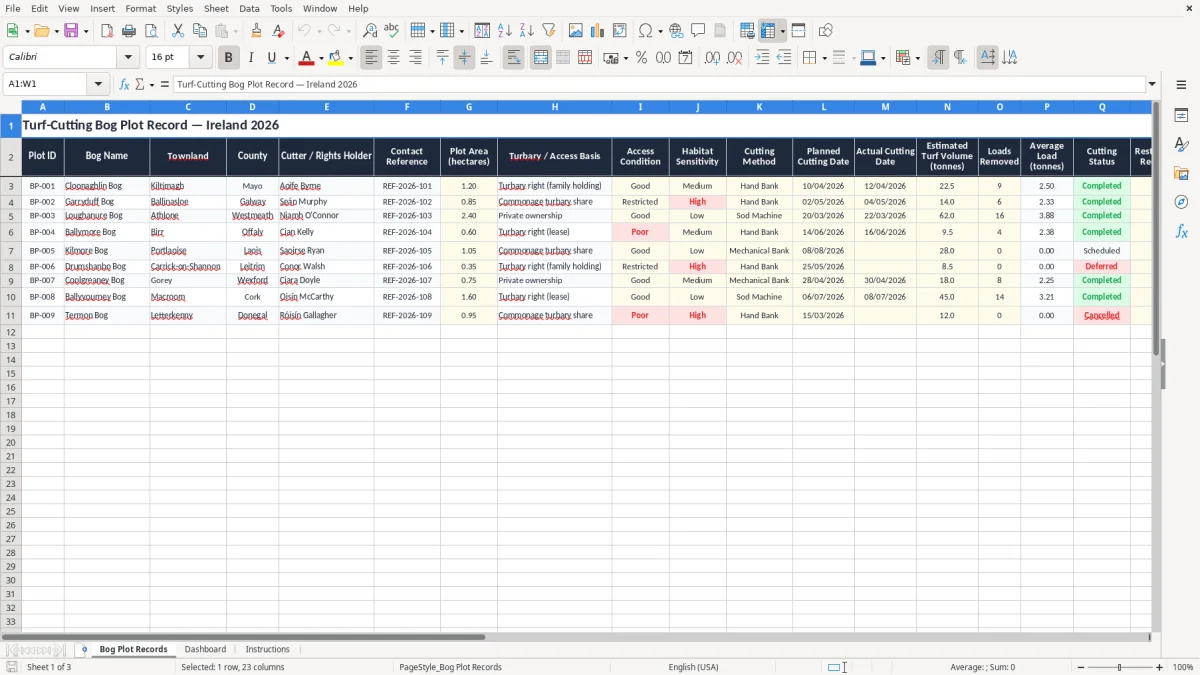
The Turf-Cutting Bog Plot Record Excel Template is an Ireland-focused workbook for organising information about bog plots, traditional turf cutting and related restoration activity. It provides one consistent place to record plot identification, bog and townland details, county, cutter or rights holder, contact references, turbary arrangements, access conditions and habitat sensitivity. The template also supports operational records, including planned and actual cutting dates, cutting methods, estimated turf volume, loads removed and cutting status.
Separate restoration and inspection fields help users follow up on environmental actions, target dates and site visits. It is suitable for landowners, turbary-rights holders, community groups, bog committees, contractors, environmental projects and inspection teams that need a practical record-keeping tool.
The workbook is designed for use across Ireland and can be expanded with additional rows for different bogs, counties and townlands. It is a management aid rather than a substitute for permissions, legal advice, environmental assessment or guidance from relevant Irish authorities.
Begin by assigning a unique Plot ID to every bog plot. Enter the bog name, townland, county, cutter or rights holder and contact reference so that each record can be identified and followed up easily. Add the plot area in hectares and describe the turbary or access basis, such as a family holding, commonage turbary share or another documented arrangement.
Before cutting, record the access condition and habitat sensitivity, then enter the planned date and chosen cutting method. Once work is completed, add the actual cutting date, estimated turf volume, number of loads removed and the applicable cutting status. Use the average-load field to support a simple comparison between total volume and loads removed where suitable.
If restoration is required, select the appropriate response, set a target date and update the restoration status as work progresses. After a site visit, record the inspection date, inspector and any observations in the Notes column. Notes may include face-bank condition, access problems, re-profiling, sward re-laying or other relevant details.
Add new rows for additional plots while retaining the same headings and formatting. Review the workbook regularly, filter by county, status, sensitivity or restoration requirement, and save dated copies where an audit history is needed. Confirm that all proposed cutting and restoration activity follows applicable permissions, landowner arrangements, protected-site obligations and current guidance in Ireland.
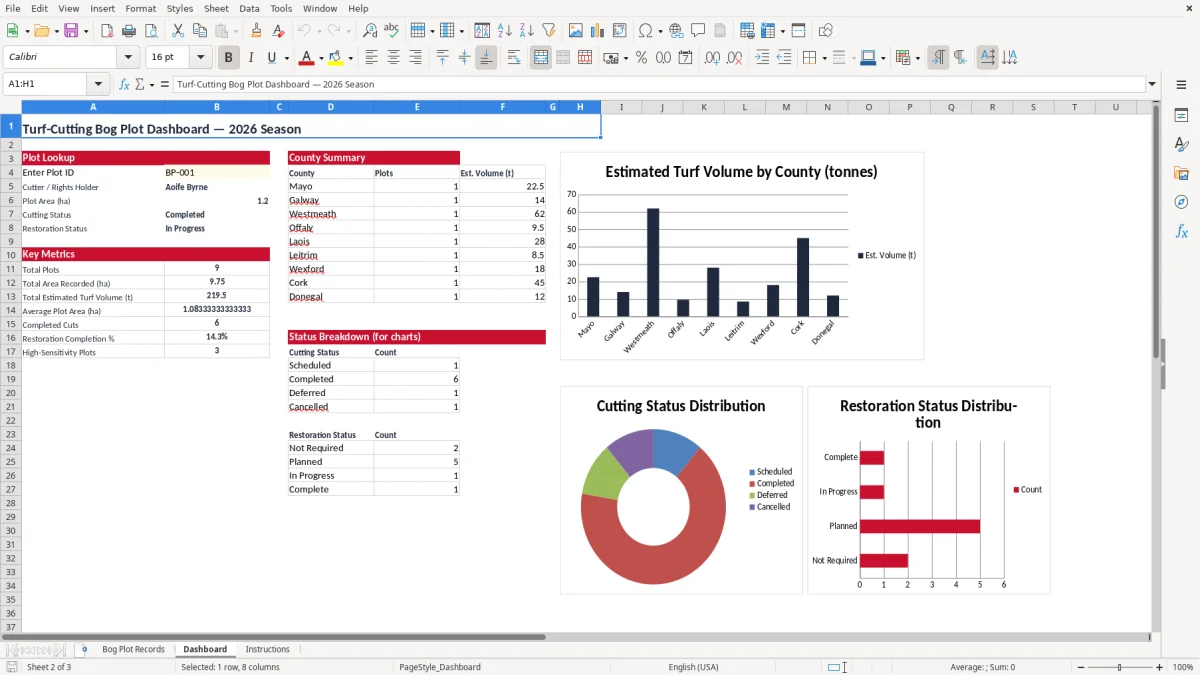
Managing turf-cutting information across several bog plots can become difficult when details are kept in notebooks, emails or separate files. This Excel template provides a straightforward Irish turf-cutting record that brings essential information into one structured worksheet.
Each row represents a plot, allowing users to identify the bog, townland and county while also recording the cutter or turbary-rights holder responsible for the activity. A contact reference can be used for an internal code, project number or correspondence reference, making follow-up easier when several people or locations are involved.
The template is designed around practical records rather than complicated data entry. Users can note the area of each plot in hectares, describe the turbary or access basis and indicate whether access is good, restricted or otherwise limited.
Habitat sensitivity can also be recorded to highlight plots where additional care, supervision or follow-up may be appropriate. These fields are useful for community-led projects, landowners, bog committees, environmental teams and others who need a repeatable way to describe local cutting arrangements.
Because the worksheet includes county and townland fields, it can be used for records throughout Ireland. It does not assume that every bog has the same ownership, access arrangement or management history. Instead, it gives users room to record information relevant to each location.
The result is a clearer plot register that can be searched, filtered and updated as work plans change. It also creates a useful starting point for discussions about access, restoration, inspections and future record management, while leaving legal and environmental decisions to the appropriate responsible parties and authorities.
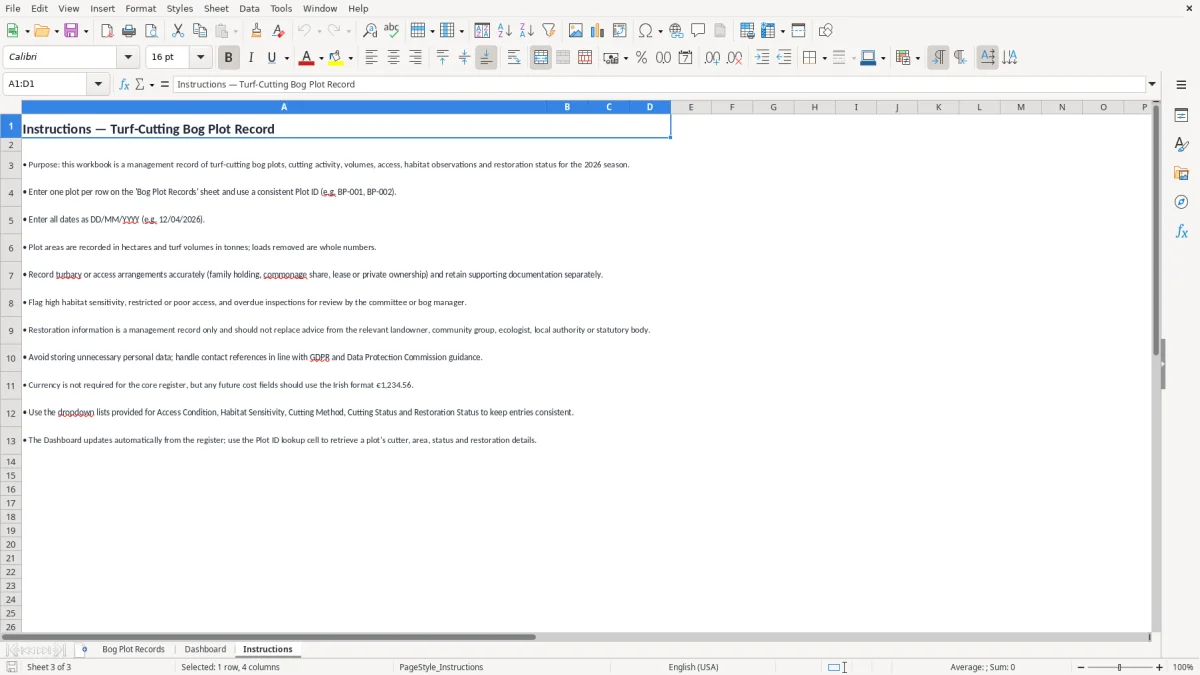
A central purpose of the Turf-Cutting Bog Plot Record Excel Template is to compare planned activity with what actually happened on the ground. The planned cutting date provides an early schedule for each plot, while the actual cutting date records when work was completed.
Keeping both dates is valuable because weather, access, equipment, permissions or site conditions may change the original plan. The Cutting Status field can then be updated as a record moves from planned to in progress, completed, postponed or another locally agreed category.
The workbook also records the cutting method, such as Hand Bank, so users can describe how turf was removed. Estimated Turf Volume is entered in tonnes, and Loads Removed records the number of loads taken from the plot. The Average Load field can support a simple operational comparison between these figures.
For example, a team may use it to review whether the recorded number of loads appears consistent with the estimated total volume. These fields are not intended to replace a certified survey or weighbridge record, but they can provide a useful working summary for local management and project reporting.
Recording activity at plot level helps avoid broad estimates that cannot be linked to a particular site. It also makes it easier to identify plots where cutting has not yet occurred, where actual dates differ from plans or where quantities need clarification. The Notes column provides space for explanations, including difficult ground, restricted access, weather delays, changes in method or observations made during removal.
Together, these features create a practical operational history that can be reviewed by rights holders, land managers, community groups and inspection teams. Always ensure that recorded activity reflects the permissions and requirements applying to the relevant bog.
Turf-cutting records are often more useful when they include information about what happens after cutting. This template therefore includes fields for Restoration Required, Restoration Target Date and Restoration Status.
These columns allow a user to flag a plot that needs follow-up, set a realistic date for the intended action and record whether the work is planned, in progress, completed or otherwise delayed. The approach is flexible enough for local projects while providing a consistent structure across multiple plots.
Restoration-related notes can describe actions or observations such as re-profiling a face bank, reinstating sward, managing exposed surfaces or checking water movement. The example records demonstrate how the Notes column can capture practical details that would not fit comfortably into a short status field.
Users can also use the Inspection Date and Inspector columns to show when a review took place and who carried it out. This creates a simple connection between a restoration requirement and the site visit or observation that supports it.
Habitat Sensitivity and Access Condition provide additional context. A plot marked as high sensitivity or restricted access may need more careful scheduling, communication or supervision, depending on the circumstances. These fields are prompts for management attention, not environmental conclusions.
They should be completed using appropriate local knowledge, project procedures and professional advice where required. Filtering the worksheet by restoration status, sensitivity or target date can help teams prepare inspection lists and identify overdue actions.
The template is especially useful for community groups and bog managers who need a shared record that combines cutting activity with responsible aftercare. It should be used alongside applicable Irish permissions, conservation requirements, landowner arrangements and guidance from relevant authorities.
The same close recording approach also suits pub stocktake records when managers need a shared tally of stock, duties and follow-up actions.
The template is built to make routine bog plot administration easier without requiring specialised software. The worksheet uses clear headings, readable formatting and separate columns for identification, access, cutting, restoration and inspection information.
New plot records can be added as required, and existing records can be filtered or sorted to answer common questions. For example, a manager may want to see all plots in one county, all records assigned a restricted access condition, all high-sensitivity sites, or all restoration actions with an approaching target date.
The layout can support a range of users. A landowner may use it to maintain a simple local register. A community group may use it to coordinate several rights holders and inspection visits.
An environmental project may use it to organise field records before preparing a report. A contractor or site inspector may use the planned, actual, volume and notes fields to record work completed and observations made. Since the workbook includes contact references and inspector details, it can also support communication between people who share responsibility for a site.
For good data quality, use one consistent format for dates, status terms, counties, cutting methods and sensitivity descriptions. Give each plot a unique Plot ID and avoid changing an identifier after reports or correspondence have used it. Review unusual quantities or missing dates before finalising a record, and save dated copies if a change history is important.
The template is intentionally adaptable, but it remains a record-keeping tool. It does not grant turbary rights, confirm ownership, approve cutting or determine environmental compliance. Users should verify permissions and current Irish requirements independently before work begins and should retain supporting documents where appropriate.

 Excel template built and verified by Ciara Byrne, Chartered Accountant (ACA) · builds the Excel templates.